
Frequently Asked Questions
What is Sensory Processing Dysfunction?
Sensory Processing Dysfunction (SPD) is a neurological disorder, manifested by difficulty in integrating and processing sensory information, received from the outside environment or their bodies. This results in “sensory seeking” or “sensory avoiding” patterns or “Dyspraxia,” a motor planning problem.
How can I tell if my child has SPD?
Some children have sensory-motor coordination problems such as being sloppy or messy or having difficulty with transitions. The original FAQ lists sensitivity to background noise, frustration with lights, spinning, hand flapping, unusual clothing or touch responses, and picky eating among possible behaviors.
What kind of child qualifies to the Atlantis Program?
We call ourselves advocates of the SPD. We help children with all Neuro-developmental disorders such as autism, PDD, ADD, ADHD, Speech Delay, Cerebral Palsy, Seizures, etc.
How can you help my child?
We educate and bring awareness to the need of the treatment, step-by-step coaching to help the child achieve complete independence, provide referral services, provide respite and coaching services for parents and families.
Why should I join ACI?
Experience working with a new modality in an inclusive environment amongst family, physicians, therapists, educators, etc. Meetings with renowned researchers and scientists; work with pioneer physicians in a holistic environment; personal growth and achievement.
What type of membership might I have?
Active, Associate, Honoree, Student and Volunteer.
Are there any dues to become a member?
Annual membership fees listed in the 2012 archive: Active members $75; Associate members $50; Students $20.
View complete original 2012 page screenshot
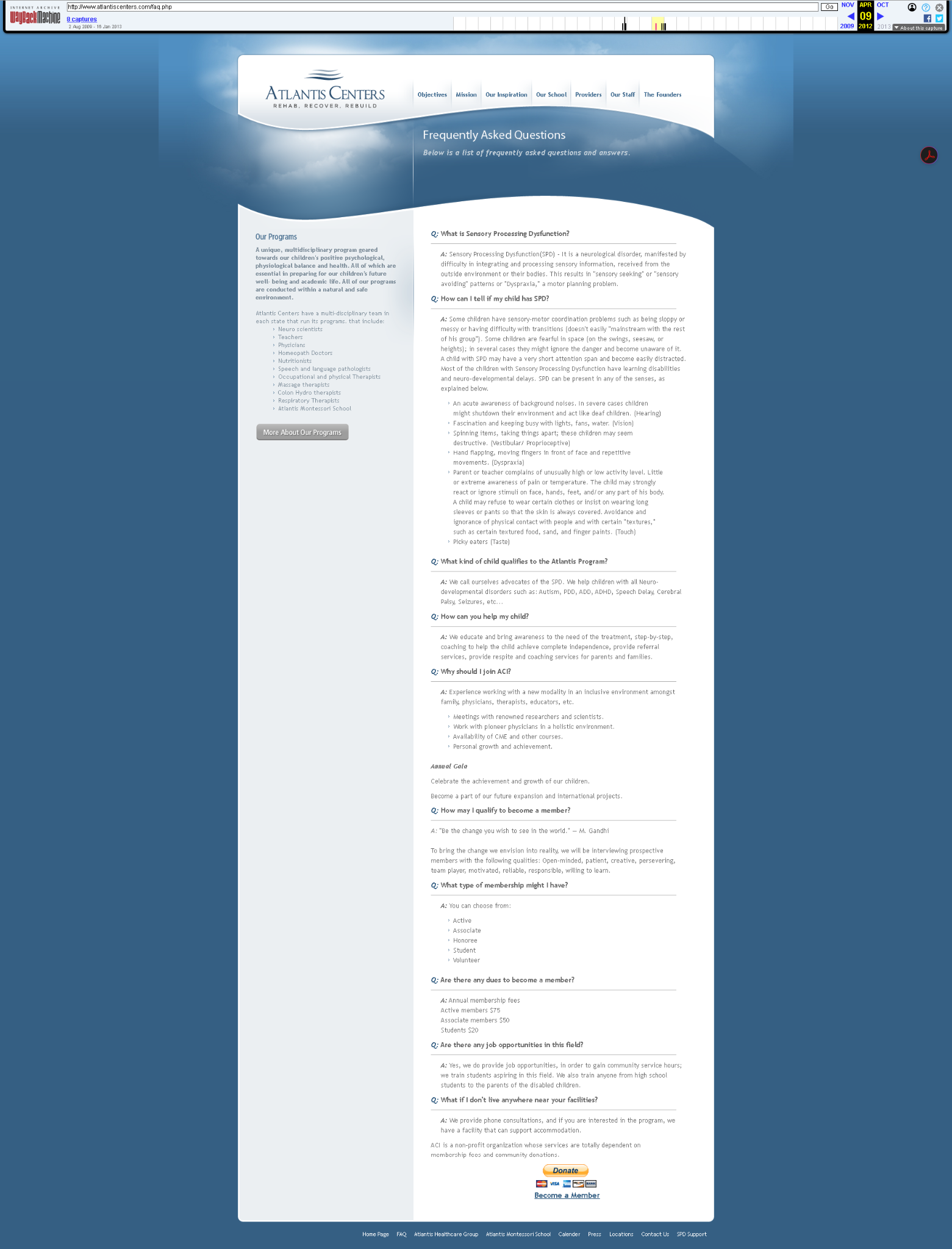
Historical content reproduced from the archived website provided for this design concept. Program descriptions and dates are archival, not verified current offerings.